Guides
German driving rules, explained in plain English.
50 guides on the rules people look up most: the German term, what it means, the mistakes learners make, and a way to remember it.
You as a driver
 Handy am Steuer Strafe: rules, fines and what is allowedHandy am Steuer in Germany: when you may touch a phone, why a red light or start-stop does not count, and the fines, points and driving bans.
 Sehtest Führerschein and first aid course: what you needSehtest and Erste-Hilfe-Kurs for the German driving licence: where to do them, what counts as a pass, how long the certificates stay valid, and costs.
Human risk factors
 Promillegrenze: alcohol limits for drivers in GermanyThe Promillegrenze in Germany explained: 0.0 for new and young drivers, 0.3, 0.5, 1.1 and 1.6 per mille, and the fines, points and bans for each.
 Theorieprüfung durchgefallen? How to study so it sticksTheorieprüfung durchgefallen: when you can retake the test, what it costs, and a study method built on understanding rules, not memorising answers.
Law and paperwork
 Führerschein digital and Fahrzeugschein: what counts todayFührerschein digital and Fahrzeugschein digital in Germany, as of November 2026: what the i-Kfz-App replaces, what you must still carry, and where.
 Führerschein Reform 2026: what changes for learnersStatus of the Führerschein Reform 2026 as of November 2026: online theory, fewer catalogue questions, flexible special drives, a shorter practical test.
 Führerschein umschreiben: converting a foreign licenceWhen you must convert a foreign licence in Germany: the six-month rule, which countries need no test, which need theory and practical, and the papers.
 German driving license: how to get one, step by stepThe steps to a German driving license for cars: eye test, first aid course, application, driving school, theory and practical test, costs and deadlines.
 German driving theory test in English: how it worksYou can take the German driving theory test in English. Format, pass mark, fee, what to bring, the retake rule, and what stays in German.
 Probezeit Führerschein: the two-year probation periodHow the Probezeit for a new Führerschein works: two years, A and B offences, the Aufbauseminar, the extension to four years and the alcohol ban.
 Punkte in Flensburg: how the points system worksPunkte in Flensburg explained: which offences bring 1, 2 or 3 points, the stages up to 8, when points are deleted and how to reduce them.
 Theorieprüfung Fehlerpunkte: how the exam is scoredHow Fehlerpunkte work in the German theory exam: 30 questions, 2 to 5 points each, 10 error points allowed, and the rule on two 5-point questions.
Roads and how to use them
 Andreaskreuz: how to behave at a level crossingThe Andreaskreuz gives trains priority. When you must wait, where to stop, what the beacons with 3, 2 and 1 stripes mean, and the fines for crossing.
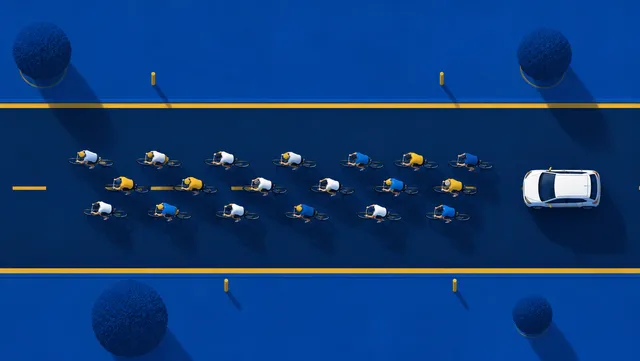 Fahrradstraße Regeln: what drivers may and may not doA Fahrradstraße is closed to cars unless a plate allows them. If it does: 30 km/h at most, cyclists set the pace and may ride side by side.
 Verkehrsberuhigter Bereich (Spielstraße): the rulesIn a verkehrsberuhigter Bereich you drive at walking pace, pedestrians use the whole road, and you park only in marked spaces. Leaving, you give way.
Right of way
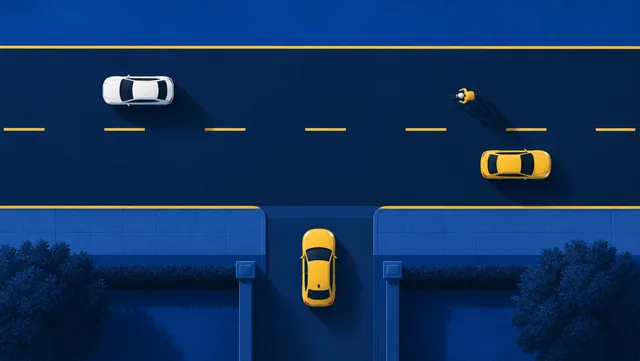 Abgesenkter Bordstein Vorfahrt: who goes firstAt an abgesenkter Bordstein the driver crossing the lowered kerb waits for everyone, even when coming from the right. How to spot it and what to do.
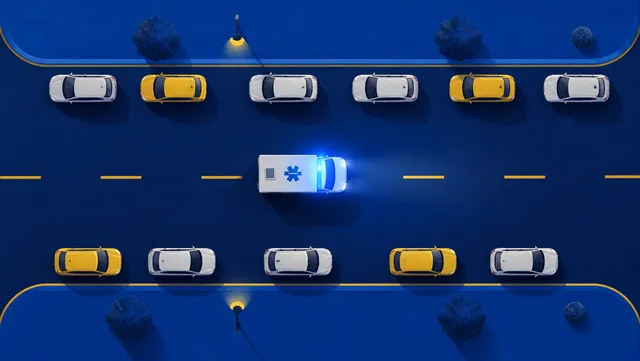 Blaulicht Martinshorn Regeln: what drivers must doThe Blaulicht Martinshorn Regeln in Germany: blue light with siren means make way at once, even at green. How to do it safely, and the fines.
 Driving in Germany rules: what newcomers get wrongThe driving in Germany rules that catch newcomers out: right before left, no turn on red, speed limits without signs, parking rules and the Autobahn.
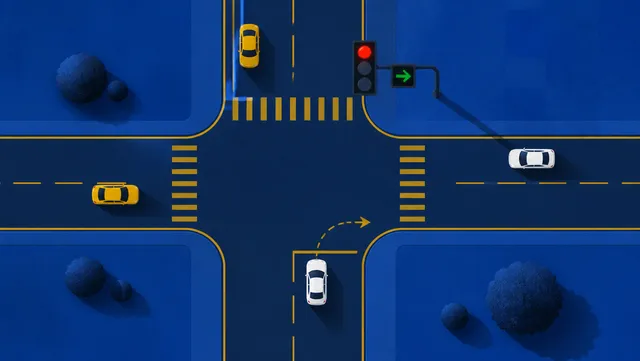 Grüner Pfeil: turning right on red in GermanyThe Grüner Pfeil plate lets you turn right at a red light in Germany, but only after a full stop. The conditions, the fines and the lit arrow.
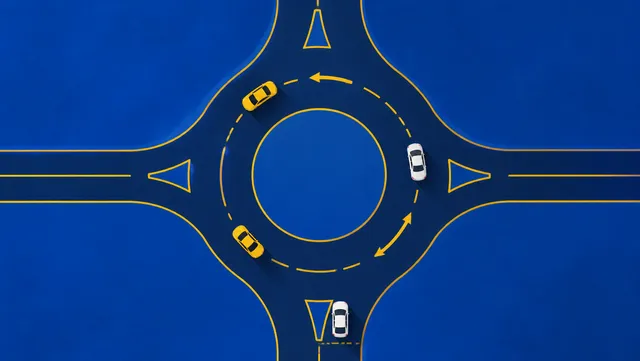 Kreisverkehr blinken: roundabout rules and when to signalAt a signed German roundabout you do not signal going in and you signal right going out. Who has priority, and what changes without the blue sign.
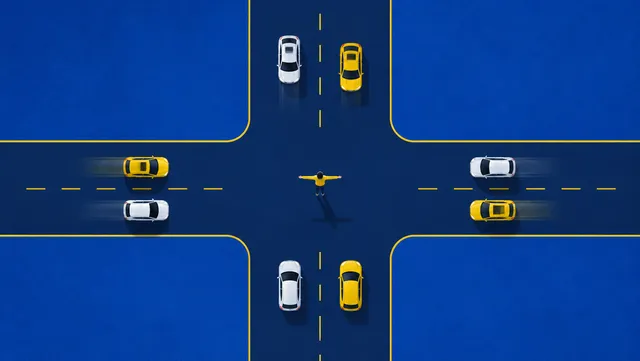 Polizist Handzeichen: police hand signals in trafficPolizist Handzeichen in German traffic: chest or back means stop, side means go, a raised arm means wait. They rank above lights and signs.
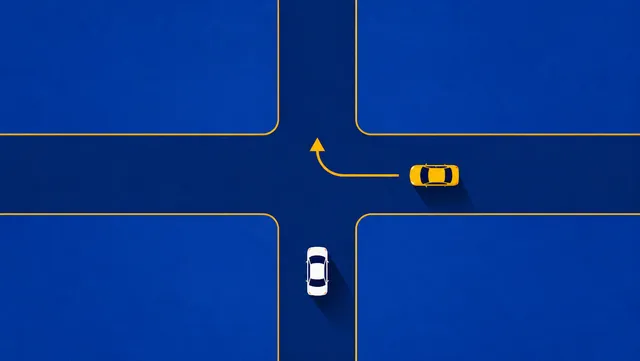 Rechts vor links: right before left explainedRechts vor links decides who goes first at German junctions without signs. Where it applies, where it does not, and the mistakes learners make.
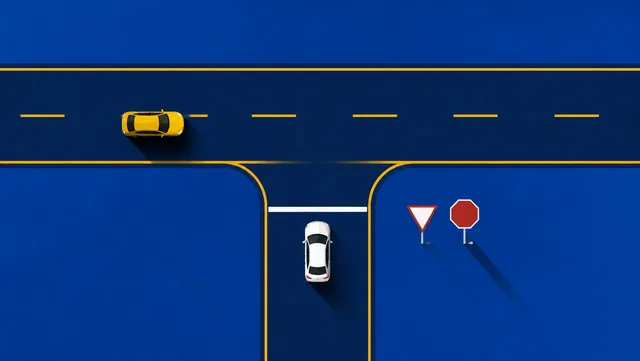 Vorfahrt gewähren Schild vs stop sign: the differenceThe give-way triangle lets you roll on if the road is clear. The stop sign makes you stop fully every time. Where to stop, and what overrides both.
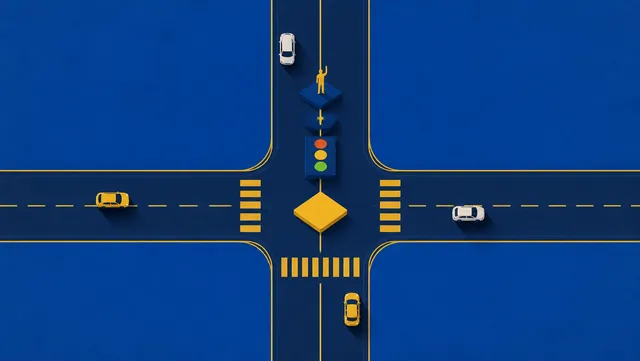 Vorfahrtsregeln: which right-of-way rule winsThe German Vorfahrtsregeln have a fixed ranking: police officer, traffic lights, signs, then right before left. How to apply it at any junction.
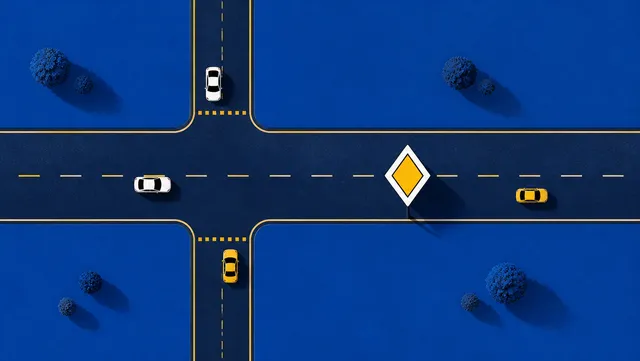 Vorfahrtsstraße Schild: the yellow diamond priority roadThe yellow diamond gives you priority at every junction until a sign ends it. How it differs from the red triangle, bends, and the parking ban.
Signs and road markings
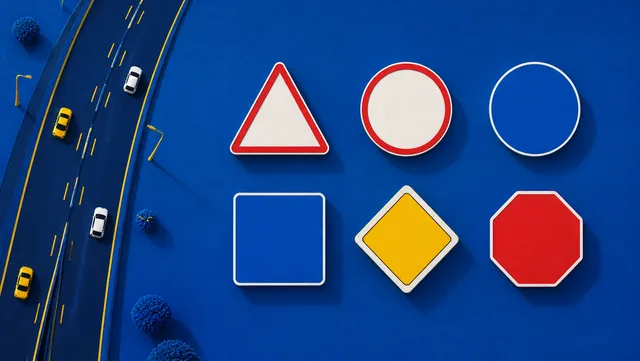 Verkehrsschilder: German road signs explained in English
Other road users
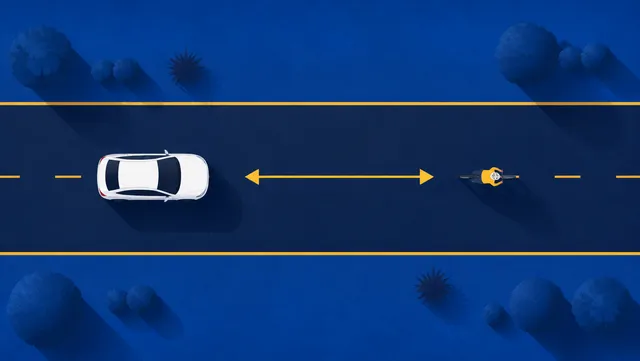 Abstand Radfahrer überholen: the 1.5 m and 2 m ruleThe minimum side distance when overtaking cyclists in Germany: 1.5 m in town, 2 m outside town. How it is measured, what to do if there is no room.
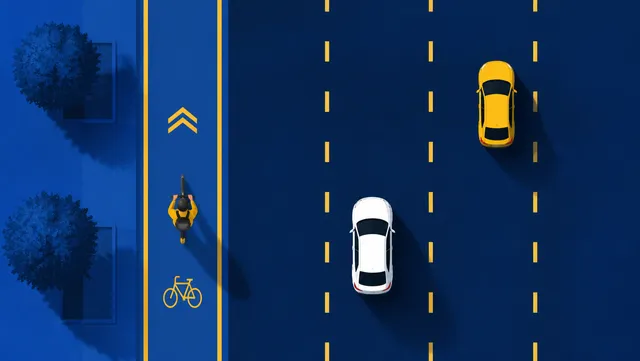 E-Scooter Regeln: the rules in Germany, riders and driversE-scooter rules in Germany as of November 2026: age, insurance, where to ride, alcohol limits and fines, what drivers must do, and what changes in 2027.
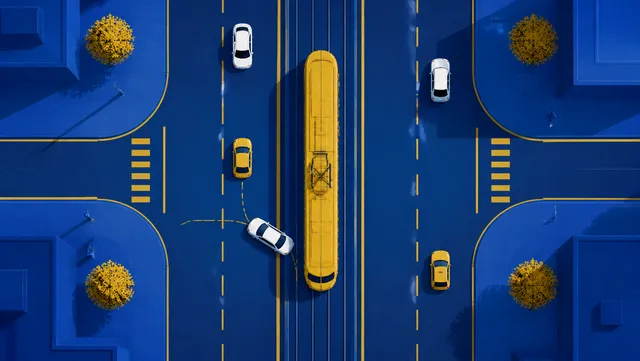 Straßenbahn Vorfahrt: when the tram goes firstStraßenbahn Vorfahrt in Germany: trams have no blanket priority, but several rules put them first. Turning, tram stops, overtaking and rails.
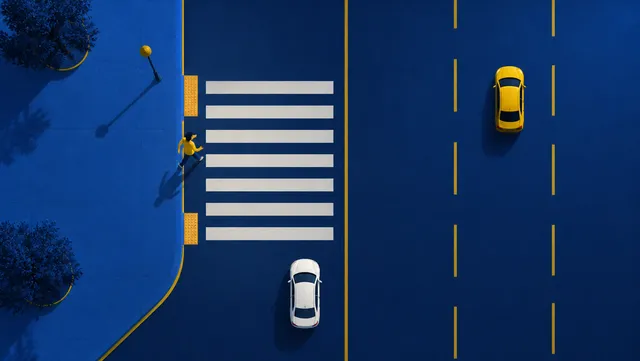 Zebrastreifen Regeln: pedestrian crossing rules in GermanyWho goes first at a German zebra crossing, when you must wait, why overtaking is banned there, what cyclists may expect, and what the fines are.
Speed, distance and eco-driving
 Anhalteweg Formel: stopping distance with worked examplesThe Anhalteweg Formel in English: reaction distance plus braking distance. Worked examples at 30, 50, 100 and 130 km/h, normal and emergency.
 Aquaplaning: why it happens and what to doAquaplaning explained: why tyres float on standing water, the warning signs, what to do in a manual or automatic car, and how to prevent it.
 Bremsweg Formel: the braking distance rule of thumbThe Bremsweg Formel in plain English: how to work out normal and emergency braking distance, with examples from 30 to 130 km/h.
 Nebelschlussleuchte: wann erlaubt? Rear fog light rulesNebelschlussleuchte, wann erlaubt? Only in fog with visibility under 50 m. How to judge 50 m, the 50 km/h rule, front fog lights and the fine.
 Reaktionsweg Formel: how to work out reaction distanceThe Reaktionsweg Formel explained in English: speed divided by 10, times 3. Worked examples, where the 3 comes from and what lengthens it.
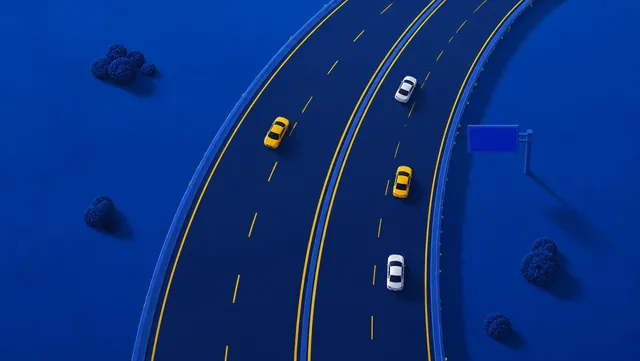 Richtgeschwindigkeit Autobahn: 130 km/h and the rulesWhat the Richtgeschwindigkeit on the Autobahn means, where 130 km/h applies, what happens if you drive faster, and the core Autobahn rules.
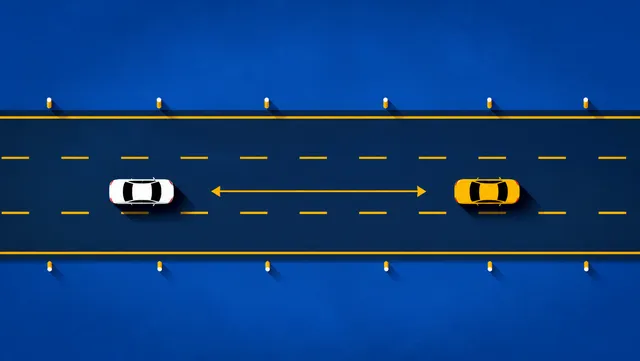 Sicherheitsabstand: how much gap to leave in GermanySicherheitsabstand in Germany: what the law demands, the half-speedometer and two-second rules, the gap in town and the fines for tailgating.
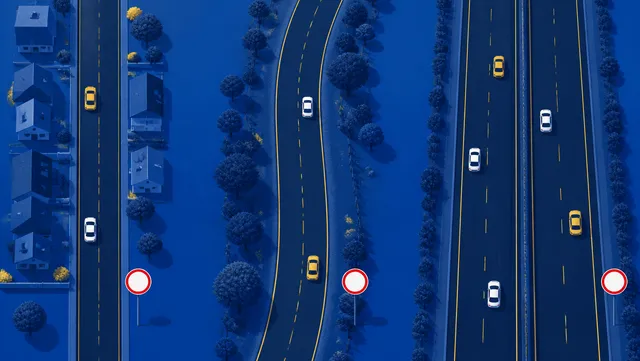 Speed limit Germany: in town, out of town, AutobahnThe general speed limits in Germany for cars: 50 km/h in town, 100 km/h outside town, 130 km/h recommended on the Autobahn, plus fog and trailers.
Manoeuvres and observation
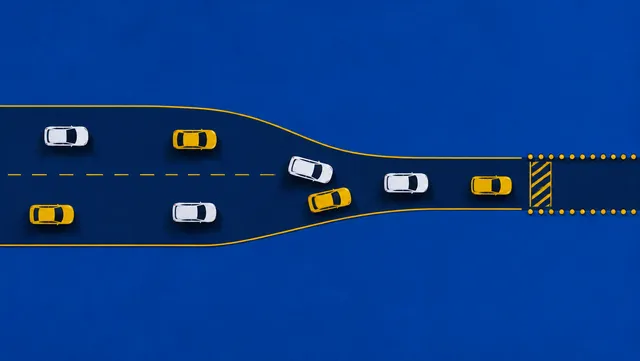 Reißverschlussverfahren: the zipper merge in GermanyThe Reißverschlussverfahren: drive to the end of the closing lane and merge there, one by one. Where the zipper merge applies and where it does not.
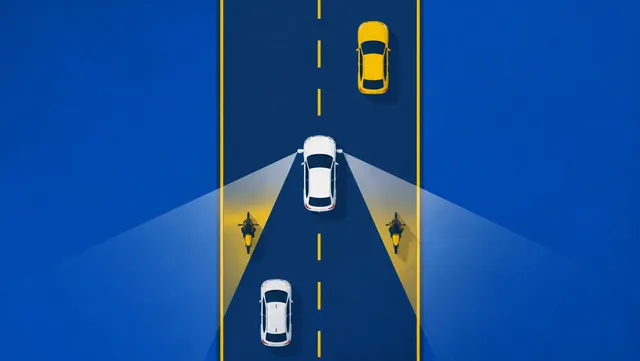 Toter Winkel and Schulterblick: blind spot, shoulder checkWhat the toter Winkel (blind spot) is, when the Schulterblick (shoulder check) is needed, the order of mirrors and signal, and how lorries differ.
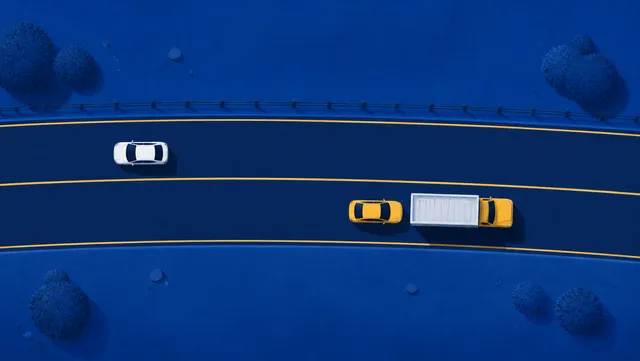 Überholverbot and overtaking rules in GermanyWhat the Überholverbot sign bans and what it still allows, where overtaking is forbidden without a sign, and how to overtake correctly in Germany.
Stopping and parking
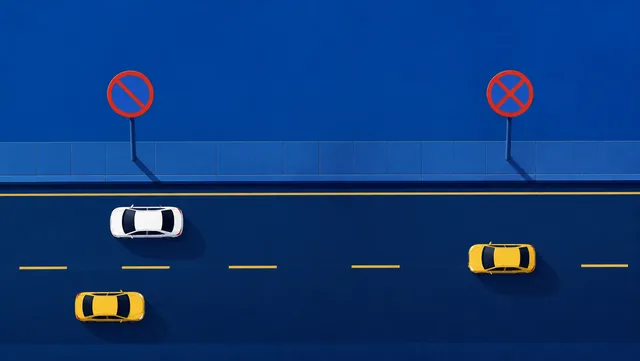 Absolutes vs eingeschränktes Halteverbot: what each allowsThe red cross means no stopping at all. One red slash allows a stop of up to 3 minutes, or loading. Where the signs apply, arrows, and fines.
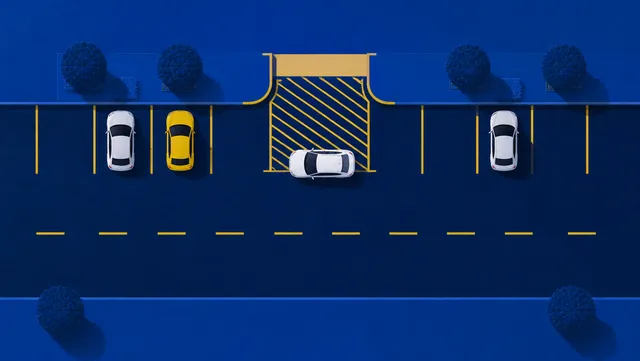 Parkverbot Schild and parking rules in GermanyWhere parking is forbidden in Germany, with and without a sign: 5 m at junctions, driveways, bus stops, lowered kerbs, plus disc and ticket rules.
Special situations
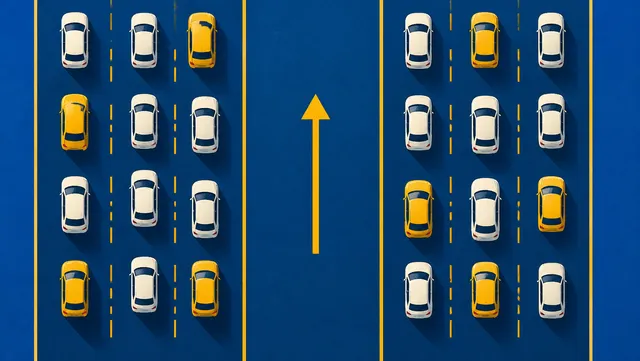 Rettungsgasse: how to form the emergency corridorHow to form a Rettungsgasse in Germany: the left lane moves left, all other lanes move right, as soon as traffic crawls. When, where and the fines.
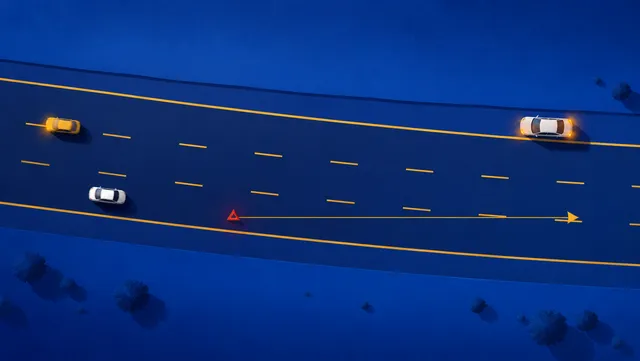 Warndreieck Abstand: breakdown and accident stepsHow far back the warning triangle goes in town, on country roads and on the Autobahn, and the correct order of steps after a breakdown or accident.
 Wildunfall was tun: steps after hitting an animalWhat to do after a wildlife accident in Germany: secure the scene, call the police, get the certificate for your insurer, and never take the animal.
Staying a safe driver
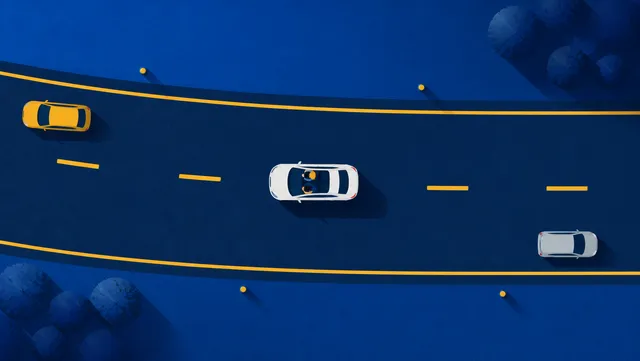 Begleitetes Fahren (BF17): driving at 17 in Germany
Car technology and physics
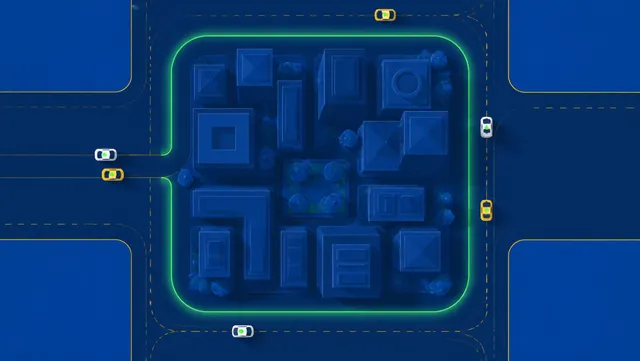 Umweltplakette: the sticker for low-emission zonesWhat the Umweltplakette is, which cars get the green sticker, how to read the Umweltzone sign, where to buy the sticker, and the fine without one.
 Winterreifenpflicht: the winter tyre rule in GermanyThe Winterreifenpflicht in Germany depends on the road, not the date. Which tyres count, what the Alpine symbol is, and the fines for getting it wrong.
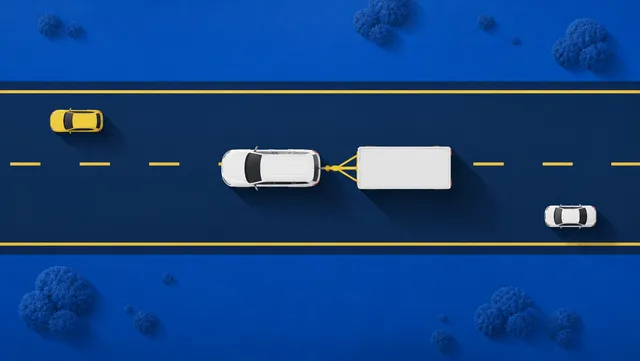 B96 Führerschein and trailers: what class B lets you tow